Nicholas Kambitsis Raceway Petroleum on How Decision Latency at the Pump Influences In-Store Revenue

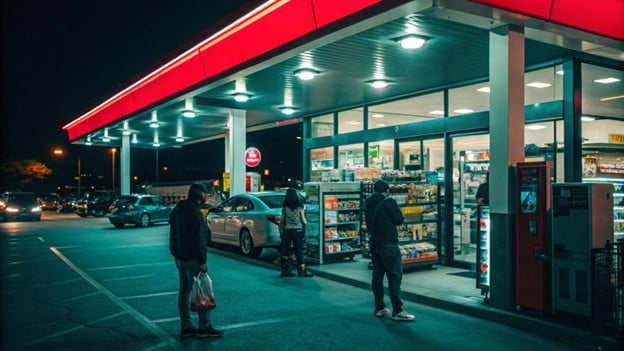
In the few seconds a customer spends standing at the pump, a quiet but critical decision unfolds. Nicholas Kambitsis points to this moment as one of the most overlooked drivers of in-store revenue, where hesitation, attention, and subtle cues shape whether a transaction extends beyond fuel. This pause, often unnoticed, represents what can be described as decision latency, a short window where behavior can shift.
Fuel retail has traditionally focused on pricing, location, and inventory, but Nicholas Kambitsis highlights that micro-moments like these now carry increasing weight. As consumer habits evolve, understanding what happens between fueling and entering the store is becoming essential to unlocking additional revenue.
Nicholas Kambitsis on Understanding Decision Latency in Fuel Retail
Decision latency refers to the time gap between completing a primary action and initiating a secondary one. In a gas station environment, this interval is the period after fueling when a customer decides whether to walk inside or leave.
This moment is influenced by several subtle factors:
- Visual cues around the pump area
- Awareness of in-store offerings
- Time sensitivity or urgency
- Perceived convenience or friction
From an operational standpoint, Nick Kambitsis emphasizes that this brief pause is not random; it is shaped by design, messaging, and environment.
Why the Pump Area Is More Than a Functional Space
The pump is often treated as a purely transactional zone. However, its role extends beyond fueling. It is the first and last physical interaction point in the customer journey.
Reframing the pump area involves:
- Treating it as a communication channel
- Using it to introduce in-store value
- Reducing uncertainty about what lies inside
- Creating a seamless transition from fuel to retail
Within this framework, Nick Kambitsis of Raceway Petroleum reflects how attention to these micro-interactions can influence broader business outcomes.
Behavioral Triggers That Shape Customer Decisions
Customer behavior during decision latency is highly responsive to small triggers. These triggers do not need to be complex, but they must be intentional.
Effective behavioral cues include:
- Clear visibility of high-demand products
- Simple, direct messaging about offers
- Visual alignment between exterior and interior branding
- Signals that reduce perceived wait time inside
By aligning these triggers with customer expectations, Nicholas Kambitsis underscores that operators can gently guide decisions without disrupting the natural flow.
The Cost of Missed Conversion Opportunities
Ignoring decision latency may not immediately reveal its impact, but it accumulates over time. Each missed opportunity to convert a fuel customer into a retail customer represents lost potential.
Common consequences include:
- Lower in-store traffic despite strong fuel sales
- Reduced average transaction value
- Underperformance of high-margin products
- Missed engagement opportunities
Insights often associated with Nick Kambitsis suggest that improving conversion does not always require more customers but better utilization of existing ones.
Nicholas Kambitsis on Designing for Seamless Transitions
Bridging the gap between the pump and the store requires a focus on continuity. Customers are more likely to enter when the transition feels natural rather than forced.
Design considerations include:
- Clear sightlines from pump to entrance
- Consistent branding across exterior and interior spaces
- Minimizing physical and psychological barriers
- Creating a sense of ease and accessibility
Through this lens, Nick Kambitsis of Raceway Petroleum demonstrates how thoughtful design can reduce hesitation and encourage movement.
Leveraging Time as a Strategic Asset
Time at the pump is often considered idle, but it can be reframed as an engagement opportunity. Even a few seconds of attention can influence behavior when used effectively.
Strategic approaches include:
- Delivering concise and relevant messaging
- Highlighting convenience-driven offerings
- Reinforcing value without overwhelming the customer
- Maintaining clarity and simplicity in communication
This perspective aligns with how Nicholas Kambitsis views operational efficiency, where even small time windows are treated as meaningful touchpoints.
External Insights on Consumer Behavior
Understanding micro-moments in retail behavior is supported by broader research. Organizations such as the National Retail Federation provide insights into how short decision windows influence purchasing patterns across industries.
Applying these insights to fuel retail allows operators to move beyond assumptions and adopt more structured approaches to customer engagement.
From Passive Waiting to Active Decision-Making
The shift from passive waiting to active engagement represents a subtle but important evolution in fuel retail strategy. Customers are no longer just completing a transaction; they are navigating a series of micro-decisions.
Key elements of this shift include:
- Recognizing the importance of attention during short timeframes
- Aligning messaging with immediate needs
- Reducing friction between different parts of the customer journey
- Creating consistency across all touchpoints
According to Nicholas Kambitsis, these adjustments transform overlooked moments into measurable opportunities.
Why Decision Latency Is a Competitive Advantage
In a competitive market, differentiation often comes from areas that are not immediately visible. Decision latency is one such area where small improvements can lead to meaningful gains.
Strategic advantages include:
- Higher conversion rates from fuel to retail
- Increased customer engagement
- Better performance without major capital investment
- Stronger alignment with modern consumer behavior
The approach reflected by Nick Kambitsis of Raceway Petroleum suggests that success lies in refining the details that shape everyday interactions.
As fuel retail continues to evolve, attention is shifting toward the subtle moments that influence customer behavior. The seconds spent at the pump are no longer insignificant; they are opportunities to guide decisions and enhance outcomes. In this environment, Nicholas Kambitsis highlights that understanding and optimizing decision latency is becoming an essential part of building a more responsive and efficient retail operation.